

Skill Hire is changing the way bricklaying and carpentry apprentices are trained and assessed, with a new Blended Learning Model designed to keep apprentices on site and make training more closely reflect the realities of the workplace.
The model combines practical on-the-job experience with self-paced online learning, regular trainer site visits and a more flexible approach to assessment. It is designed to give apprentices more time on the tools while allowing trainers, host employers and apprentices to work together on a tailored training plan.
Skill Hire (part of the IntoWork Group), operates as a Registered Training Organisation, Group Training Organisation and recruitment agency across Western Australia. The new approach reflects its broader focus on practical training leading to career opportunities.
Under the blended model, apprentices still complete the same volume of learning and knowledge assessments, but much of the theory is delivered through Skill Hire’s Learning Management System, with trainers monitoring progress and providing additional support during site visits or scheduled catch-up blocks where needed.
The major difference is in how practical skills are assessed. Instead of relying primarily on fixed block-release training, trainers can gather evidence while apprentices are working on real jobs.
Skill Hire Operations Manager – Training Services, Richard Moore said the model was about making apprenticeship training more flexible, practical and responsive to each apprentice’s progress.
“The trainers get out there, they’re flexible, they work with the hosts and the apprentices, and they come out on a regular basis to capture direct observations,” Mr Moore said. “The student obviously gets to learn and be assessed in their working environment, which is great because that’s what an apprenticeship model is supposed to be about.”
The model also aims to reduce disruption for host employers, particularly smaller trade businesses that rely on apprentices being available on site. Trainers can visit worksites, assess relevant skills in real time and only bring apprentices into a training venue when specific skills or units cannot be completed on site.
Richard Moore said this was one of the key benefits for employers.
“The hosts like it because we’re not releasing these apprentices for six weeks every year,” he said. “They might have to allow one day a month to do some self-paced learning, and if apprentices have fallen behind, we can bring them in for additional support. It all depends on the student.”
He said the model also creates stronger communication between trainers, apprentices and host employers.
“It’s all more trainer-led,” Mr Moore said. “The trainer goes out, builds that communication up, talks to the student, monitors them online, and if a host has a specific job going on that lines up with a unit of competency, the trainer can go out and assess the apprentice on site.”
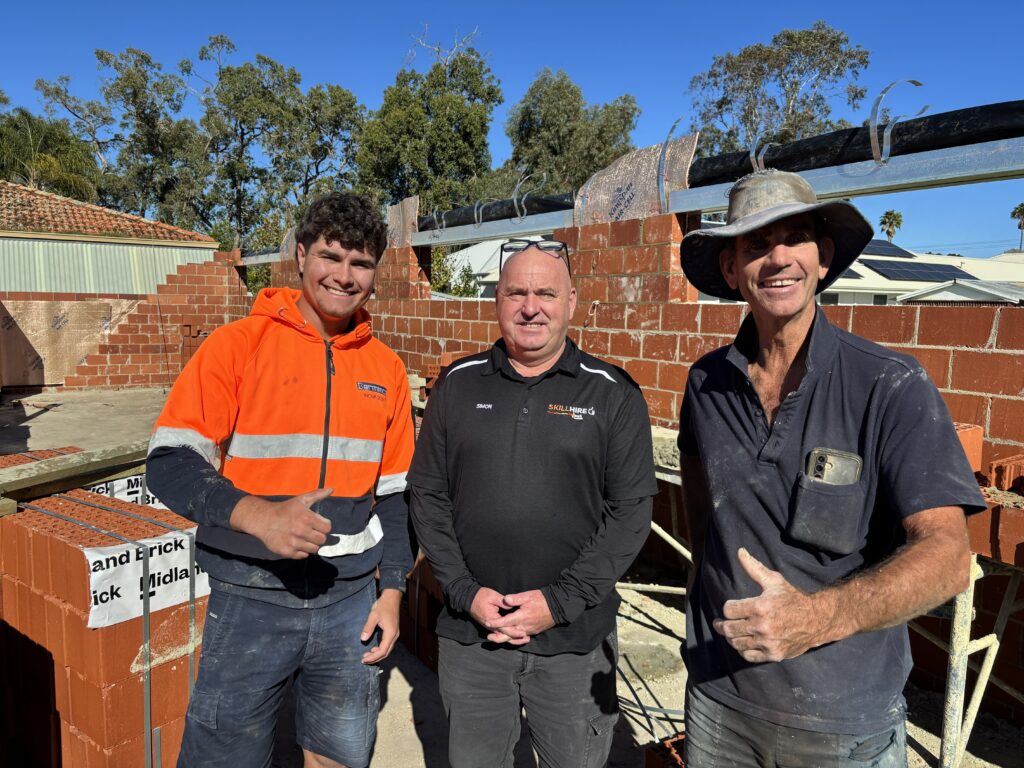
Trainer and Assessor with Skill Hire, Simon Brazier said the value of the model is the efficiency of training and assessment that happens while apprentices are doing real trade work.
“If I come out and I’m observing an apprentice building a difficult corner, I can look at the units and say, ‘Well, actually, he’s done this,’” Mr Brazier said. “So they don’t have to come into the workshop to do it.”
Fourth-year bricklaying apprentice Henry Pilmer has recently moved into the blended learning model after transferring to Skill Hire. While the timing has made the model less suited to the final stages of his training, he said the approach would be highly valuable for apprentices starting earlier in their journey.
“I do like the fact that the trainer comes on site and I don’t have to leave the work site as much,” Henry Pilmer said. “For someone starting their apprenticeship, that would really speed up the process. If I was first starting out, this would definitely be the path I’d go down.”
Henry Pilmer said the model could reduce duplication for apprentices by allowing trainers to assess work already being completed on site.
“Some of the work I’ve done on site, I had to go to Rockingham and redo it,” he said. “Now I’ve done it twice, taking more time and having to get off the job for a week. Where they could have just come, analysed it and ticked that box.”
Richard Moore said the blended learning model represents a shift in both training delivery and workplace culture, with trainers working more closely with host employers to ensure apprentices are gaining the right exposure on site.
“In a way, we’re refining how tradies train apprentices on site,” he said. “It’s more inclusive and more invested in the apprentice’s development.”
For Skill Hire, the aim is to create a more practical, flexible and individualised training experience that helps apprentices keep building skills in the workplace while still meeting the requirements of their qualification.
“We’ve just got to prove to the industry now that it works,” Mr Moore. “It’s early stages, but that’s how we approach it, we just have to demonstrate that it really does work.”


Media Hub
Laying the foundations for a successful career in the trades
When Henry Pilmer first lent a hand to his neighbour Michael at the age of 14, he had no idea it would shape his future career. Four years later, the 18-year-old is close to completing his bricklaying apprenticeship and already has his sights set on running his own business. “One afternoon I went over and […]
Read MoreJackson comes full circle with Skill Hire
At 28, Jackson has already built the kind of trades career many people spend decades working towards. After completing his bricklaying apprenticeship with support from Skill Hire (part of the IntoWork Group), he now runs his own business and is helping the next generation of tradespeople kickstart their own career. His current fourth-year apprentice Mason […]
Read MoreNew Skill Hire training model gives apprentices more time on the tools
Skill Hire is changing the way bricklaying and carpentry apprentices are trained and assessed, with a new Blended Learning Model designed to keep apprentices on site and make training more closely reflect the realities of the workplace. The model combines practical on-the-job experience with self-paced online learning, regular trainer site visits and a more flexible […]
Read More